Discover the safety protocols, route planning, and tracking systems we use to guarantee your cargo arrives on time and in perfect condition—anywhere in the country.



Discover the safety protocols, route planning, and tracking systems we use to guarantee your cargo arrives on time and in perfect condition—anywhere in the country.
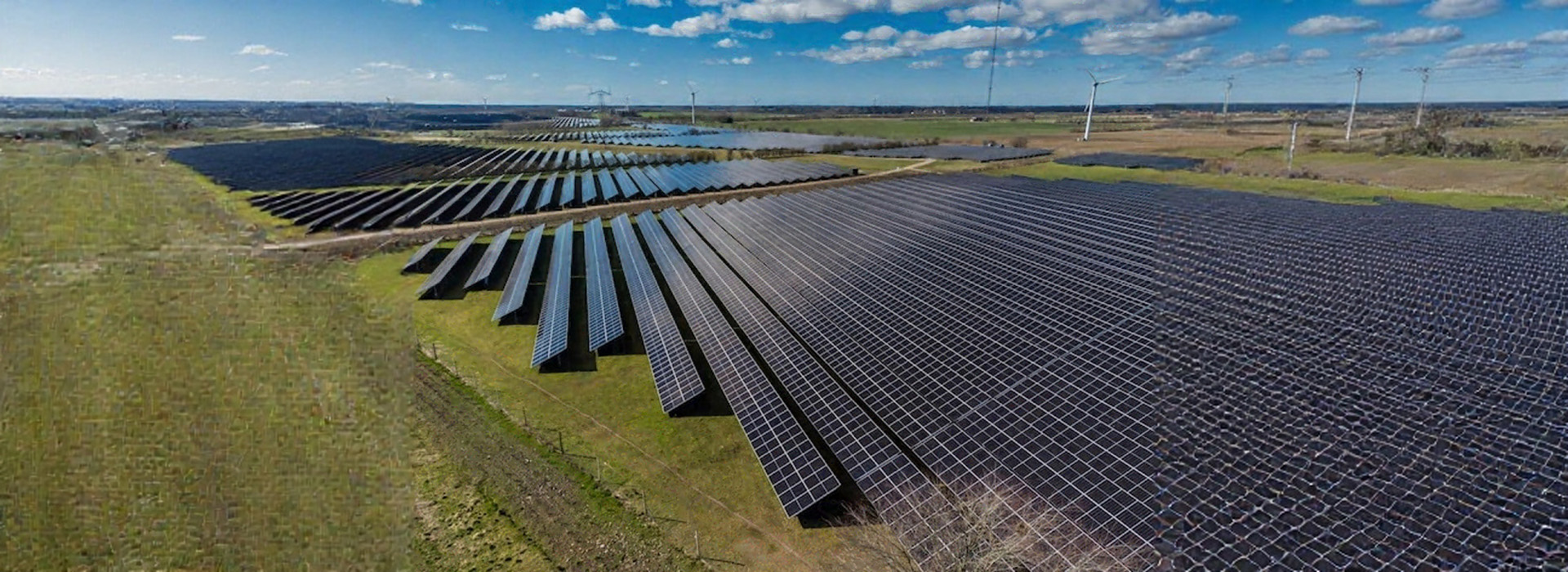
Over the past year, the UK solar industry demonstrated meaningful progress amid evolving policy, infrastructure reforms, and strong deployment momentum. With 2025 emerging as one of the most significant years yet for solar growth, industry stakeholders are now anticipating how the sector will expand further through 2026 and beyond. This article summarises the key developments in UK solar power, highlights milestones reached in 2025, and outlines the primary trends shaping the outlook for 2026.
In 2025, the UK government advanced multiple energy policy reforms aimed at accelerating renewables. The publication of the Clean Power 2030 Action Plan and the Solar Roadmap provided much-needed clarity and direction for industry planning and investment. These strategic frameworks set a target of reaching 45 to 47 gigawatts (GW) of installed solar capacity by 2030, reflecting the government’s commitment to expand Solar’s role in the UK’s energy mix.
Alongside high-level targets, regulatory changes including updates to planning policy strengthened the position of solar generation by prioritising renewable energy proposals in development decisions.
Industry associations like Solar Energy UK welcomed the establishment of a dedicated Solar Council and the continuation of the Solar Taskforce’s work, noting these efforts as essential to building investor confidence and aligning private sector activity with national goals.

In 2025 the UK surpassed 20 GW of installed solar capacity, marking a transition from solar as a complementary technology to a core pillar of Britain’s energy system. Large-scale solar projects and rooftop installations both saw growth, driven by increased commercial uptake and broader residential adoption.
Residential and commercial rooftop solar markets, in particular, recorded strong performance as energy costs motivated businesses and homeowners to invest in onsite generation.
Despite these gains, industry commentators noted that actual build rates remain below the levels required to meet the Clean Power 2030 targets. To achieve long-term goals, deployment closer to 6 GW per year will be necessary through the remainder of the decade.
Learn how we plan every shipment—from initial booking to delivery—with built-in checks and contingency measures to avoid delays.
Explore our GPS tracking, automated scheduling, and digital proof-of-delivery tools that give clients real-time visibility and control.
See how our regularly maintained, modern fleet is equipped for all freight types—ensuring both safety and speed.
One of the central challenges for solar deployment has continued to be the grid connection queue. Although reforms from the energy market regulator Ofgem seek to streamline connections (with benefits expected by 2026), the backlog remains a bottleneck for many developers.
Managing connection timelines efficiently will be crucial to unlocking the full pipeline of planned solar projects and ensuring capacity additions keep pace with national targets.
Looking ahead, analysts and industry leaders anticipate several trends that will shape UK solar power in 2026:
1. Growth in Co-located Solar and Storage Projects
There is expected to be increasing interest in combining solar with battery storage assets, particularly as grid capacity limitations encourage onsite generation strategies. Co-location supports grid flexibility and helps maximise returns in an energy market with more periods of low or negative pricing.
2. Expansion of Onsite and Private Wire Solutions
Commercial and industrial customers are likely to adopt onsite solar and private wire arrangements to manage energy costs and mitigate exposure to grid constraints.
3. Workforce and Supply Chain Development
With overall demand for solar rising, the need for trained installers, engineers, and certification programs will increase. Robust training and supply chain resilience will be key contributors to scaling deployment
4. Industry Response to Market Challenges
As the sector navigates policy and infrastructure obstacles, industry groups are preparing communication efforts to counter anti-renewables rhetoric and advocate for sustained governmental support.
The UK’s solar sector made notable strides during 2025, driven by clearer policy frameworks, accelerating deployment across rooftop and ground-mounted projects, and growing investor confidence. While challenges remain, particularly around grid connections and deployment speed, the outlook for 2026 is defined by innovation, energy storage integration, and smarter decentralised energy models that can support the UK’s transition to net zero.
Within this evolving landscape, Nuvira Earth Systems Ltd is committed to playing a practical and scalable role in supporting the UK’s clean energy ambitions. Through the design, supply, and installation of high-efficiency solar PV systems, smart inverters, battery storage solutions, and EV charging infrastructure, Nuvira Earth is helping homes, businesses, and commercial developments reduce reliance on the grid and improve energy resilience.
As the market increasingly moves towards co-located solar and storage, private wire solutions, and intelligent energy management, Nuvira Earth is focused on delivering integrated, future-ready systems that align with emerging policy direction and real-world energy needs. By combining technology-led solutions with certified installation support and long-term service reliability, Nuvira Earth aims to contribute meaningfully to faster deployment, grid flexibility, and a more sustainable energy ecosystem across the UK.
Continued collaboration between government, industry, and solution providers such as Nuvira Earth will be essential to maintaining momentum, unlocking capacity, and ensuring solar energy remains a cornerstone of the UK’s clean power strategy through 2026 and beyond.

At NuVira Earth Systems Ltd, we are proud to be a leading green tech company in the UK, specialising in the design and manufacturing of high-performance EV charging solutions, solar energy systems, and energy storage technologies.
At NuVira Earth Systems Ltd, we are proud to be a leading green tech company in the UK, specialising in the design and manufacturing of high-performance EV charging solutions, solar energy systems, and energy storage technologies.
© 2025 - All Rights Reserved by Nuvira Earth







Comments
adamgordon
Thanks for sharing this post, it’s really helpful for me.
cmsmasters
Glad to be of service.
annabrown
This is awesome!!
cmsmasters
Thanks.